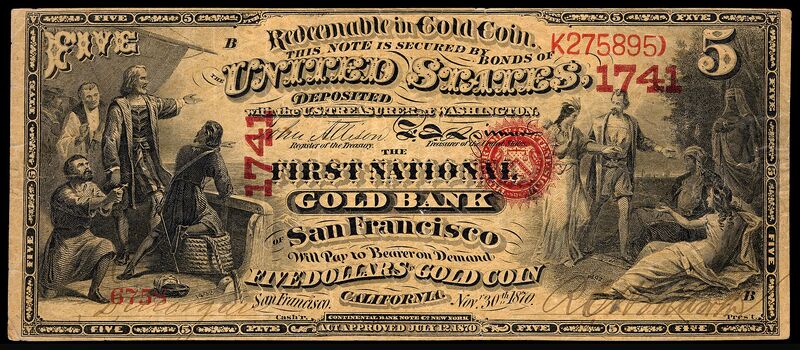
Javier Milei, Argentina’s leading candidate, in the presidential elections slated to be held next week, has proposed an unorthodox idea to combat his country’s rampaging 138% annual inflation rate: dollarizing the economy.

Dollarization, a colloquial term to refer to the adoption of the USD as legal tender, by substituting the Argentine Peso with the USD, comes across as a common-sense solution to snuff out hyperinflation. By substituting its beleaguered domestic currency with the USD and shutting down the country’s central bank (ostensibly to prevent it from cranking out reams of domestic currency to finance the country’s ever-yawning fiscal deficits), Argentina hopes to arrest the death spiral of its domestic currency (the Argentine Peso sunk to a new low of 1000+ Vs. The USD a couple of days ago).

This [substitution] is, in effect, expected to break the back of hyperinflation immediately since a full substitution completely eliminates the risk of depreciation to the local currency.

Argentina wouldn’t be the first country to attempt a dollarization…

Ecuador, El Salvador and Panama are some examples of countries that have adopted the USD as legal tender in the past. In the current era, Zimbabwe’s move to dollarize (after hyperinflation tipped past a daily rate of 100% in late 2008) met with some success with inflation averaging about 43% from 2009 until 2023.

… but as a $632 billion economy, it will be the largest Emerging Market to attempt it yet.

For a country that’s now developed an iron-clad reputation as a serial-defaulter on Foreign Currency Debt, is currently the largest debtor to the IMF and which, in 2002, due to its weak fiscal discipline, had (prematurely?) pulled the plug on its currency board regime, there appears to be little choice now but to adopt the USD as new legal tender.

The Argentine attempt to dollarize piques the curiosity of any EM Debt investor, especially when viewed in the context of Argentina’s size as the second largest economy in South America.

When asked, in 1939, about the role that the Soviet Union might play in the second world war, Churchill replied: “It’s a riddle, wrapped in a mystery, inside an enigma”.

That was his best attempt to describe a situation he found difficult to comprehend.

You may well use the very same words to describe the Argentinian plan to dollarize its economy.

By

Avinash Menon, CFA

Founder and CEO,

52 Seconds Capital Limited

Other New Articles

All fiscal policy decisions are determined by the Congress and the White House; the Fed plays no role there. Its remit is the Monetary Policy.

This often creates a conundrum for the Central Bank: how does it then really tackle inflationary headwinds that are offshoots of a loose Fiscal Policy?

There are many examples of US fiscal profligacy from the recent past: the Trump tax cuts of 2017 (the tax cuts were supposedly funded but turns out they were mostly financed by federal borrowing); the roughly $5 trillion dollar in pandemic stimulus money aka Helicopter Money; the $1.2 trillion spending infrastructure bill that Biden signed into law in 2021; and the $433 billion investment in the Inflation Reduction Act, 2022 (offers households rebates and incentives of up to $28,500 to install climate friendly household appliances and switch to electric cars)

Guess who pays for those government spends/rebates/subsidies/tax incentives?

Well, they ought to be supported by tax revenues but if the tax revenues come in lower than the spends, then you have a problem.

This is where the US Treasury steps in, issues USTs, and saves the day for the Government.

But what if the federal government does not rein in spending? What then?

Enter ‘The Bond Vigilantes’!

A Bond Vigilante (a word coined by Edward Yardeni) refers to a bond market investor who protests against monetary or fiscal policies considered inflationary by selling bonds, thus increasing yields.

The events that whipsawed the bond markets over the last few days have led to whispers that the Bond Vigilantes are back and are hemming in the US Treasury (in a close parallel to how the Gilt Markets torpedoed former UK chancellor Kwarteng’s GBP 45b package of unfunded tax cuts at about the same time last year).

The Fed Rate is an effective tool for determining monetary policy and reining in inflation, but the Bond Markets can bring things to a boil faster if they decide to play ‘activists en masse’ (Opinions vary with Bill Gross indicating, in a recent interview, that Bond Vigilantes will have a muted effect).

The ramifications in the bond markets play out across a much larger scale around the planet involving Banks, Insurance companies, Pension Funds, Corporate and Sovereign Debt Markets.

Insurance and Pension Funds buy bonds to hold them until maturity, but those portfolios may be upended in a situation where the Bond Vigilantes sell ahead of the pension funds, leaving the funds no choice but to sell out as well to meet collateral calls (These are the very sequence of events that played out in the UK last year when the yields on Gilts soared momentarily).

The events over the last few days have played out against the backdrop of a net treasury issuance in 2023 that is the second highest on record (after the pandemic) and in an environment where the biggest buyer of T-bonds, the Fed, has stepped back from the market as it continues its tightening program.

Something has to give!

By

Avinash Menon, CFA

Founder and CEO,

52 Seconds Capital Limited

Other New Articles

Microsoft fired the first shot in the Generative AI arms race when, earlier this year in January, it announced a $10 billion investment in the Chat GPT parent, Open AI. Alphabet Inc. followed suit with Bard; Amazon announced Bedrock. And Apple has been relatively quiet.

Yet, the investment in Open AI isn’t Microsoft’s most significant one in recent times. That investment pales in comparison to Microsoft’s $69 billion acquisition of Activision Blizzard announced in early 2022.

The Microsoft-Activision Blizzard deal, after regular skirmishes with anti-trust regulators in the US, UK and the EU now appears to be on the verge of completion.

Microsoft has long been criticised for its inability to create iconic consumer products (and remains comfortable in its traditional mould of an enterprise technology company).

Funny but true: Xbox is the only pure-play consumer-focused business that Microsoft has!

Microsoft has done well to integrate LinkedIn and GitHub; but the Activision Blizzard acquisition could be its toughest integration act yet.

The deal is pricey, yes, (the acquisition price is about 8x Activision’s 2021 revenues) but Microsoft’s real challenge would be to make Activision’s blockbuster games Candy Crush and Call of Duty available on all screens, including Mobile Screens.

This creates Microsoft’s biggest challenge in this acquisition: the mobile screens are cornered by the Apple – Alphabet duopoly (through the Apple Store and Android Playstore).

This leaves the ‘Enterprise Technology Specialist’ with no choice but to try and build an app store for games on iPhone and Android smartphones.

That App Store from Microsoft, expected to be launched in March 2024, has a lot riding on it!

It’s the key to the successful integration of what is the largest tech acquisitions in recent times.

By

Avinash Menon, CFA

Founder and CEO,

52 Seconds Capital Limited

Other New Articles

Trivia time folks!

Food? Strike 1.

Energy? Strike 2.

Shelter? Bingo!

Why?

Think about it, once you have locked down your tenancy contract with your landlord, does your rent really change month-on-month the way other categories, say Food or Energy, within the Consumer Price Index do?

Your rent changes but with a one-year lag, only when it comes up for renewal.

And that one-year lag in rent changes could create a significant impact in the Core CPI including Shelter (excluding Food and Energy) prints in the next few US CPI readings.

Impact is Weight * Change.

1. On Weight (and this is the simple one) ‘Shelter’ has a 34.8% weight within the US CPI, making it the largest expenditure category. A large part of ‘Shelter’ comprise of two key sub-categories: Rent (7.5%) and Owner’s Equivalent Rent (OER) (25.6%).

2. On Change (and this is the kind of simple that can be tougher than the complex, nevertheless we press ahead!):

a. While both ‘Rent of Primary Residence’ and ‘OER’ grew by 7.8% and 7.3% respectively YoY (Aug ’22 – Aug ’23), the back half of the year could see some deceleration in the rent asks from last year playing out.

b. For lower or flat-lining rents to play out its important that housing prices contract mildly or hold. There is a positive correlation between housing prices and rents; higher house prices translate into higher rents. And lower prices into lower rents. House prices do not need to crash for this to happen. A dial-back in the expectations of a price rise in housing is enough to cool-off rents. Think about Japan: one of the reasons why the country, which has a one-fifth weight towards Housing in its CPI, has gone through an extended spell of deflation despite negative interest rates has been the busted house prices (and from there on the muted rent growth).

c. Shelter has now increased for 40 consecutive months (measured from May 2020 until August 2023). Is that about to change?

A slowing pace of increase in Shelter Inflation over the next few months and the first negative Shelter Inflation print by Mid-2024 appears more likely from hereon, especially when viewed against the twin backdrop of the 30-year fixed rate on mortgages topping 7.5% and the fact that 90% of households (with a mortgage) pay less than the current rates.

It will be Interesting to see how this category within the US CPI trends over the next couple of quarters.

By

Avinash Menon, CFA

Founder and CEO,

52 Seconds Capital Limited

Other New Articles

The Mexican Presidential Elections of 2024 will be historic: the country is all set to elect its first female president.

Earlier this month, Morena, the country’s ruling party formally nominated Mexico City’s Mayor Claudia Sheinbaum Pardo as its candidate to take on Xóchitl Gálvez, an independent senator who caucuses with the conservative National Action Party in the Senate.

In the lead up to these nominations, the candidates have sparred lightly on various issues: while Sheinbaum has focused on the ‘continuity’ of incumbent president Lopez Obrador’s policies, Senator Galvez has heavily criticised the current regime’s weak security strategy, in particular its failure to crack down on the drug cartels.

Nothing unusual there.

What is unusual is how both candidates have, in all these months, steadfastly refused to acknowledge the elephant that’s standing right between the two candidates: Petroleos Mexicanos (PEMEX), which holds the unsavoury title of being the world’s most indebted oil company currently, has liabilities of $110 billion.

In a sign that that the gloves are finally coming off, Senator Galvez has announced her intent to undertake sweeping reforms at PEMEX opening it up to private investment and bringing in a renewables tilt to its business.

Privatization of energy assets has always been a touchy subject in most countries and especially in Central and Latin America where leftist policies still hold sway: Argentina established the YPF as a state-owned oil enterprise in 1922; Mexico nationalized PEMEX in 1938; Brazil nationalized the oil industry in 1953 (creating Petrobras in the process); and Venezuela did it in 1976.

Some of these policies were disastrous for the nations involved (Venezuela got torched in the process) but Brazil did something remarkably different: in 1997, President Cardoso broke the monopoly and forced Petrobras to compete with foreign firms. And later in 2002, President Lula created a system of public-private partnerships.

It’s the Lula-public-private-model for Petrobras that Senator Galvez appears to have in mind for PEMEX.

The oil giant has regularly received cash injections and tax deferrals from the Obrador government and that’s kept it afloat, but these moves are akin to kicking the can further down the road. The current government’s concessions to PEMEX are estimated to be 1% of GDP. This is expected to rise to 1.5% of GDP under the next government.

With its total debt now standing at 8% of Mexico’s GDP, PEMEX wouldn’t be the first state-owned company to make an ungainly transition from being a crown-jewel to an eyesore.

In the absence of any sweeping reforms, the embattled oil-giant has made itself at home.

In a familiar setting.

On a slippery slope.

By

Avinash Menon, CFA

Founder and CEO,

52 Seconds Capital Limited

Other New Articles

Earlier this year, in March, you will recall how over the course of just a few days, three small-to-mid sized US banks failed. The triggers for their failures varied: SVB went down after it realized MTM losses on its long durations USTs; Silvergate and Signature, both holding significant exposures to crypto assets, followed suit. And then later, across the Atlantic, Credit Suisse collapsed.

It’s a well-known fact that regulators typically try to resolve a banking crisis over the weekend.

Consider that: only a 48-hour window to delve through reams of data. Broker a rescue. Attempt to stem a potential contagion. And arrive at a decision before Monday rolls in.

Against such a backdrop, it is safe to assume that speed takes precedence over accuracy. And ‘guesstimates’ trump the most detailed of valuation models. (What else can explain UBS recording a $29 billion negative goodwill on its Credit Suisse acquisition? or JPM’s grand bargain price on its First Republic acquisition?)

That first act in March was also characterized by Jerome Powell laying the blame for the collapse of these banks squarely on the bank management’s failings.

Beyond that, not much really came through from the US regulators, on steps to be taken to avoid a chaos of this nature in the future.

Until late last month, that is.

On August 29th, a clutch of US regulators, including the Department of Treasury, the office of the Comptroller of the Currency, the Federal Reserve System, and the FDIC, released a consultation paper, that proposed for:

“certain large depository institution holding companies, U.S. intermediate holding companies of foreign banking organizations, and certain insured depository institutions, to issue and maintain outstanding a minimum amount of long-term debt.”

The consultation paper goes on to say that:

“The proposed rule would improve the resolvability of these banking organizations in case of failure, may reduce costs to the Deposit Insurance Fund, and mitigate financial stability and contagion risks by reducing the risk of loss to uninsured depositors”

This echoes similar views from FINMA in early August.

The line of thought is clear: banking regulators are nudging the industry in the direction of “Bail-ins” (“Bail-outs” help to keep creditors from taking losses while “Bail-ins” mandate that creditors take losses).

A Bail-in has its fair shares of pros and cons (but that’s a story for another day), but the regulatory direction is clear: shift the costs of a bank’s failure closer to where it originated from ─ its shareholders and creditors (and away from the general public’s coffers!).

It’s also a vote from the US regulators and FINMA for lesser chaos (and less frenetic weekends 😉) during the resolution of the next banking crisis.

By

Avinash Menon, CFA

Founder and CEO,

52 Seconds Capital Limited

Other New Articles

The pandemic hijacked 2020; NFTs, SPACs and IPOs (and the Kim-Kanye breakup) were perhaps the biggest draws of 2021; the War and its problem child ─ Inflation ─ were dominant in 2022; and so far, Generative AI has been the overarching theme of 2023.

2024 will see large sections of the planet’s population witness something that has always had high entertainment value.

2024 is chock-a-block with elections.

The year kicks off with the Taiwanese Presidential Elections. Followed by Presidential Elections in Russia (Putin, has not yet officially declared his intention to run, but if elected, it would be his fifth term); general elections in India, Mexico, and Indonesia; culminating in the US Presidential Elections.

As you scour through the various campaign promises made by both the opposition and the incumbent party leaders, beyond the cheap thrills provided by media sleuths unearthing skeletons from the past (remember how Obama had to wave his birth certificate around?) or fuelling xenophobia (Melania Trump is a spy), what you are really looking for from the leadership candidates are the ideas that are unstoppable. And usually what makes an idea unstoppable, apart from the simplicity of its structure, is the time or the era within which it takes roots.

Vivek Ramaswamy who is making waves in the Republican primaries, appears to be holding a bag full of such ideas: a new American Revolution that draws inspiration from the nation’s founding fathers; driving a wedge between Russia and China; slashing aid to Ukraine; and all this while taking clear aim at the Woke Movement.

Of what he holds in that bag, two ideas in particular, stands out for its boldness (and evokes memories of Sen. Elizabeth Warren’s call in 2020 to ‘Break Up Big Tech’):

1. Vivek Ramaswamy plans to take a large axe to the federal workforce, with plans to lay off 75% of the workers. Yeah, you read that right, that’s 75%! He also believes there is no place for what he refers to as the ‘administrative government’ comprising of the FBI, DOE, and CDC among others in his idea of America.

2. Pegging the USD to Gold, thereby reducing the influence of the US Fed on the economy.

Very often all that an idea needs is a simple structure and great timing. And what can eventually lead to an idea’s demise are a lack of details around execution.

A lot can change between now and election date, but for you and I and all the other market participants, what makes election year interesting are the ideas that could turn out to be unstoppable.

The ones that were best described by Victor Hugo when he said: “Nothing else in the world…not all the armies…is so powerful as an idea whose time has come”.

By

Avinash Menon, CFA

Founder and CEO,

52 Seconds Capital Limited

Other New Articles

104 companies have newly listed on the US stock market this year. As of today (and not surprising considering the hurricane-strength headwinds against IPOs since H2 2022) this is 30% less relative to the same time in 2022, which had 149 IPOs by this date and is minuscule compared to the 1035 all-time record new listings in 2021 ─ the year of the IPO gold rush!

Some of the high-profile listings this year were restaurant chain, Cava and JNJ’s former consumer health division, Kenvue; and the returns corner was dominated by biotech names like Genelux and Structure Therapeutics up 264% and 97% YTD respectively.

Technology, scorched last year, has been inconspicuous so far (Some tech investors might enjoy the nostalgic feelings of 2021 that the choppiness of VINFAST evokes in them; and may have even watched the 90% listing day plunge in Better with emotions similar to what the cavemen of yore may have experienced when they first learnt the pros and cons of handling fire)

And yet, as Arm and Instacart get ready to list, technology does appear to dominate the back half of the IPO pipeline this year. And the buzz gets stronger around the potential listing of TikTok, Epic Games, Stripe and Discord.

Apart from the absence of tech names, 2023 has been an unusual IPO year in another way: there was only one direct listing.

Surf Air Mobility was the sole company to list directly.

Listing directly has some advantages:

1. The firm avoids paying underwriting fees.

2. Since no new shares are created, early investors aren’t diluted.

3. There is no lockup period

The direct-listing process doesn’t come without its drawbacks though: the obvious ones would be that there is no new capital, there is no green-shoe option to address a potential surge in demand come listing day; and the initial phase of the listing is marked by intense bouts of price volatility (Surf Air has plunged 57% since its July 27th listing)

Look at those drawbacks again: they are interesting because the period from 2018 to 2021 was marked by companies choosing to list directly (not really to avoid paying underwriting fees to investment banks, that’s a minimal gain) but because they were already flush with capital!

A look at some of the high-profile direct listings from 2018 to 2021 confirms this: Spotify (2018), Slack (2019), Asana (2020), Palantir (2020), Roblox (2021) and Coinbase (2021). Those balance-sheets had piles of cash!

There were only 11 direct listings in the 20 years prior to Spotify’s in 2018 and incredibly enough there have been 13 since then.

Against the backdrop of heavy-compression in private market valuations and the US Fed exercising a vice-like grip on credit, it will be interesting to see if Direct-Listings become more frequent or infrequent options from here on.

By

Avinash Menon, CFA

Founder and CEO,

52 Seconds Capital Limited

Other New Articles

It’s called ‘Sajin Jeongchi’ in North Korea; and serves a useful purpose for its reclusive leader. There is nothing derogatory about the words though and it’s in fact used all over the world — ‘Sajin Jeongchi’ is Korean for the use of photographs in politics!

Indeed, why speak when a picture can speak a thousand words?

Only using stills could, however, pose problems for the less-reclusive, more-gregarious leaders from across the world. Imagine the sense of collective loss we would all feel if ‘Musk Vs. Zuckerberg: The Cage Fight’ is reduced to a still, and not live streamed!

Because if pictures are worth a thousand words, then videos are probably worth a million!

And what better than a montage of a centenarian US statesman meeting the Chinese President?

It’s in this context, that the release of video snippets from Henry Kissinger’s meeting with President Xi Jinping in China, during the former’s recent visit — as a private citizen — assumed some significance.

The videos created some stir on social media that the visit was an attempt by Kissinger to placate frayed tempers between the two superpowers.

Kissinger is a known figure in China; after all, he along with Nixon was instrumental in drawing out a reclusive China onto the world stage in 1971. That breakthrough remains his crowning glory yet!

Kissinger is an ‘either you love him or loathe him’ kind of a diplomat, depending on which side of the lens of history you view his body of work from. Arguably, what takes the sheen off Kissinger’s 1971 China triumph is the disasters that his policies led to in East Timor, Cambodia, Laos, Chile, and East Pakistan.

So, the man who once famously said ‘America has no permanent friends or enemies, only permanent interests’ was unlikely to have met the Chinese President to discuss gallium and germanium export bans.

Could it have been Taiwan then? Unlikely.

Any discussions around Taiwan would have been awkward for Kissinger because he (along with Nixon) claimed credit for the One China Policy formulated in 1972 that considers Taiwan to be a part of the PRC.

It’s unlikely then it wasn’t any of these issues.

There was perhaps nothing more to this than a 100-year-old US statesman meeting the Chinese President.

In effect, it was just Kissinger homing in on perhaps his only major career triumph.

A sepia-tinted picture would have done just fine.In effect, it was just Kissinger homing in on perhaps his only major career triumph.

By

Avinash Menon, CFA

Founder and CEO,

52 Seconds Capital Limited

Other New Articles

There was a lot of brouhaha earlier this year, both in mainstream and social media, after short-seller #HindenburgResearch stepped up and took aim at Adani Enterprises. The ugly fallout that ensued from thereon between the hunter and the hunted had all the elements of a pulp fiction thriller packed within a lurid cover.

Opinions were polarized: from a large swathe of raucous investors who believed the timing of the report (released on January 24, two days before Adani enterprises FPO raise) made it appear that Hindenburg wanted to torpedo the FPO (which it did!) to another, although a lot quieter, corner of the market which thought this was a classic short-selling move: wrong-footing a company whose stock had made a parabolic 19x move in just under 5 years.

You may be wondering: why am I referencing a controversial event from January this year? Isn’t it too late to take sides anyway? 🙂 Well, I am not really trying to referee this on the lines of who is right and who is wrong (that’s best left to the markets to decide!) but I am revisiting this from the context of the short-sell trade itself.

How has it fared?

Its mixed: while the shares of Adani Enterprises have more than doubled from its Feb 2023 low point of ~INR 1,000 and sit pretty at INR 2,490 today, they are still down 35% on a YTD basis! Is the momentum upward? Yes, the shares have a 3-month return of 30%!

Ah, momentum. That’s as double-edged as it gets.

All traders experience moments of horror during the course of their work, but perhaps, as any short seller would know, nothing can match the terror experienced by a trader during a short squeeze. This opens up a theoretical possibility of an infinite loss!

So, is this the moment where the trade turns against Hindenburg Research? Or will the initial short theses strengthen further? (Hindenburg does not disclose its portfolio positions)

That next act could possibly be decided by more disclosures around two things:

(1) Recall that Hindenburg’s held short positions in the Adani Group Companies through its offshore bonds and ‘non-Indian traded derivative instruments’. The ‘non-Indian traded derivative instruments’ was later identified as Structured Product Derivatives (SPDs) by government agencies from India but was never fully explained by either SEBI or Hindenburg.

(2) That and the recent moves from SEBI to recategorize the risk grades of FPIs; and make the disclosure norms more stringent for high-risk FPIs.

And yes, opinions could well remain polarized. Short selling is like that.

Perhaps best explained by Jim Chanos when he said: I will always understand the schadenfreude aspect to short selling. I get that no one will always like it.

By

Avinash Menon, CFA

Founder and CEO,

52 Seconds Capital Limited

Other New Articles