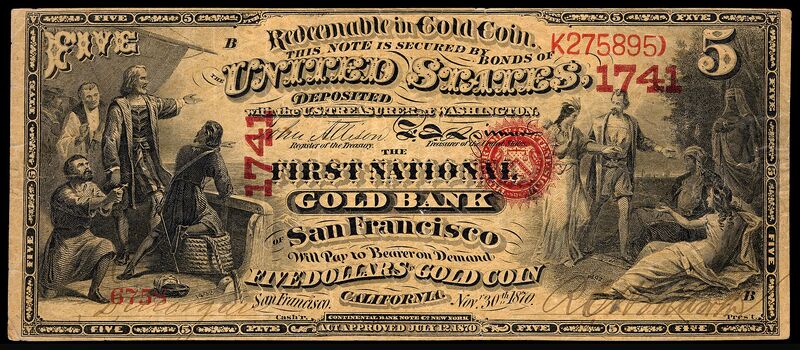
$1,999.

That’s where Apple’s first foldable starts.

For reference, same lineup: the 18 Pro is $1,199, the Pro Max $1,299. The case is $79. The folio with the kickstand, $129.

This is by-far the most expensive iPhone, Apple has ever put on a stage.

Audacious is the only word for that price point. And I think that quietly tells us the world Apple has decided to inhabit.

This is Apple moving deeper into a realm that can only be described as Necessary Luxury.

Or Functional Luxury, if you prefer.

An object you cannot function without, priced like one you could happily live without.

Which raises the more interesting question: can Apple do a Birkin here?

Manufactured scarcity.

A waitlist that becomes the point. A resale market that clears well above retail. And eventually a price tag that is itself part of the appeal rather than the obstacle.

Get that right and Apple conquers the final frontier by becoming a Veblen Good, where demand climbs with the price instead of falling away from it.

Pre-orders open 16 October, ships on the 23rd across 70+ markets.

Should be a nice passage of play to watch from here to the end of the year.

And now the bit I just could not resist.

On the very same day that Apple announced its audacious price point, another charming man laughed in the face of near 5% 10 YR UST Yields and reminded everyone what being audacious is truly all about: he did this by promising every American adult a $5,000 dividend if the Republicans hold both chambers at the midterms.

With crystal-clear clarity he then added one caveat – the money has to be spent inside the US.

No word yet on how that gets enforced, or funded, though Vance has gestured at tariff revenue for a cheque that runs to something like $1.2 trillion.

There would have been a genuinely juicy conspiracy theory here, if only Apple’s highest-ever price point had landed after that announcement instead of roughly seven hours before it.

Two grand of a five grand cheque, spent domestically, on the most American consumer object there is.

Wrong chronology of events, sadly.

Apple priced before anyone was promised the money.

I am claiming nothing.

Only that the sequencing was still almost too neat, wasn’t it?

By

Avinash Menon, CFA

Founder and CEO,

52 Seconds Capital Limited

Other New Articles

Silicon Valley has always had one default setting: leave the upside uncapped.

And it works.

It is a large part of why we have more trillion-dollar market caps today than at any point in market history.

So when a company that took its annualised revenue from $14B in Feb to over $47B by May appears to have a handbrake bolted onto what looks like a pathway into orbit, it is worth a think.

Anthropic is a Public Benefit Corporation.

On its own, that is not the story.

Around 20 PBCs already trade publicly. Laureate listed in 2017. Lemonade and Vital Farms in 2020. Coursera, United Therapeutics, Warby Parker and Allbirds all followed. Veeva became the first listed company to convert into a PBC in 2021.

This road [PBC] is well-travelled. Directors must balance shareholder returns against a public benefit written into the charter and report on it.

What differs is what gets written into that charter.

Allbirds committed to environmental conservation. Warby Parker, to vision and eye health. That’s auditable – you can count the glasses.

Anthropic committed to responsibly developing and maintaining advanced AI for the long-term benefit of humanity.

There is no metric for that. Nothing to count. Which means the charter alone binds nobody.

So Anthropic added something no listed PBC has ever had.

Class T shares.

At first glance the idea rhymes with the mission-locked models across the Atlantic. Rolex, owned entirely by the Hans Wilsdorf Foundation. Novo Nordisk, controlled by the Novo Nordisk (NVO) Foundation.

Until you look closely …

The NVO Foundation holds roughly 28% of the share capital and about 77% of the votes. It holds control. It also holds economic rights – real dividend streams that fund the research the foundation exists to fund.

Control and financial sustenance live under the same roof.

Rolex is the same idea taken further. One trust, 100% ownership, no external shareholders to answer to at all.

Now Anthropic.

Class T carries no economic rights. No dividends. No liquidation preference.

What it carries instead is the right to elect a majority of the board.

Trustees who take nothing out of the company decide who runs it.

That’s the handbrake I was referring to earlier.

Every mission-locked structure pairs governance power with an economic stake. Anthropic has severed the two entirely. Nearly 20 PBCs have listed. None of them arrived with this.

And that sets up a nice predicament.

Its incoming shareholders will want precisely what Silicon Valley shareholders have always wanted – that path into orbit!

The T shares could prove to be annoying.

The 5 trustees have no incentives riding on it.

That is the design.

Upton Sinclair’s observation still holds: it’s difficult to get a man to understand something, when his salary depends on his not understanding it

Remains to be seen if the incredible T-shares are much more than mere tokenism.

By

Avinash Menon, CFA

Founder and CEO,

52 Seconds Capital Limited

Other New Articles

Consider the irony.

In 1933, the US dollar was still convertible to gold. And yet, that very year, Americans were prohibited from owning gold.

Executive Order 6102 forced citizens to hand in their gold.

Their currency was gold-backed, yes. But the citizen holding that gold-backed currency was not allowed to hold gold. That prohibition lasted 41 years – private ownership was only fully restored in 1974.

Cut to today.

There is a physical note called the Goldback. It is NOT federal legal tender, but it has actual fractional gold embedded into it. No questions about convertibility to gold since the note itself is the bullion asset.

Read that again.

The very thing the citizen was once barred from holding is now the promise printed into a private note.

Where was it launched?

Utah. In 2019. A state – among 11 states – that still recognises gold, silver, and sometimes platinum as a voluntary medium of exchange.

Since then, it has spread beyond its place of origin

The Goldback has since found acceptance across other red states – Nevada, New Hampshire, Wyoming, South Dakota, and more recently Florida, Oklahoma and Arizona.

Now, let me be clear about what this is not.

This is not a call to say Goldback will topple the dollar. It won’t. And this is certainly not a nudge to pile into it.

This is merely an observation.

Against a backdrop of peak debt and nagging questions around the purchasing power of fiat, the evolution of money is throwing up little experiments at the fringes.

Most will amount to nothing.

But ‘most’ is not ‘all’

And that sliver – that trend you were too quick to dismiss – is often where the next chapter of monetary history quietly begins.

Keep an eye on the fringes.

It’s where you must train yourself to look first.

By

Avinash Menon, CFA

Founder and CEO,

52 Seconds Capital Limited

Other New Articles

Working directly on client portfolios means you spend a lot of time not just on asset-allocation, security selection, time-horizons, return expectations, time horizon, and concentration checks; but also to observe the trends around the market structure itself.

In general, the market structure has evolved beautifully across time. We are at a sweet spot in time when spreads are razor-thin, liquidity is abundant, and execution venues are increasingly kept open for much longer.

And yet, every now and then, you come across a market where something doesn’t appear right under the hood.

Like something is freakishly off.

There appears to be something Squid Games-like about the Kospi now.

Like most markets, the KOSPI rules are uncompromising: an 8% drop triggers an automatic Level 1 circuit breaker, freezing all trading for 20 minutes to force a cooling-off period.

And these circuits have been triggered in the past.

Nothing out of the ordinary there.

But consider this.

In the entire history of the KOSPI, these halts have only been triggered 12 times.

Remarkably, 6 of those 12 market-wide halts have occurred this year.

Some of the reasons for this are well documented.

The fuel powering this frenetic trading is an active, domestic retail trading base that routinely drives volumes. Outstanding local margin debt recently exploded to a record-shattering 38 trillion won (~$24.8 Billion), with massive chunks of that focused on SK Hynix and Samsung.

What is less documented are the causes.

1. The Gamma Squeeze

When retail traders hoard out-of-the-money (OTM) calls on Samsung or SK Hynix, institutional market makers sell them the contracts. To hedge their risk, market makers must immediately buy the underlying shares. As this buying pushes the price up, Gamma accelerates their risk, forcing them to buy even more shares.

And that’s the wicked gamma squeeze playing out in all its horror.

2. The 20-50x Leveraged Perpetual Contracts (LPC)

There are other causes, more gory in nature:

Because local regulators enforce strict safety caps on-exchange to protect investors, an aggressive, stateless grey market has stepped in to feed the hunger for maximum risk. Major offshore crypto platforms have bypassed traditional capital controls entirely by launching synthetic futures contracts on Korea-linked equities.

Traders are potentially using stablecoins to buy into 20x-50x LPCs built on top of U.S.-listed 3x leveraged KOSPI ETFs.

The result?

A staggering 120-150x structural leverage on the underlying index.

A minor sub-1% daily swing in the KOSPI is all that it would take to completely wipe out a trader’s principal.

By

Avinash Menon, CFA

Founder and CEO,

52 Seconds Capital Limited

Other New Articles

The Greenshoe word is spoken of in hushed tones in the lead up to any Mega-IPO.

So here’s a truism: Do not revere the Greenshoe.

In effect, if the IPO ‘succeeds’ you end up getting diluted.

And well, if the IPO fails – on listing day that is – then in any case, you are seeing the market marking you below your allocation price.

You might want to think the Greenshoe is about price stabilization.

Not really.

While it sounds investor-friendly to say the greenshoe stabilizes the price for the issuing company and new investors, the structural design of the greenshoe is overwhelmingly weighted in favor of the underwriter.

It is essentially a risk-free, asymmetric bet for the syndicate underwriting the issue.

How?

Even before the stock opens for trading, the underwriter has deliberately opened the highest form of risk for itself by over-alloting the deal by 15% (15% in the context of US listing, that is).

This is, in effect, a naked short postion, of say 15 million shares if the IPO was for 100 million shares.

From hereon emerges two scenarios:

A. Stock drops on listing. Sure, the underwriter does stabilize price but the act that leads to that is their short position getting covered. This may still be a nicer thing for long-term holders of stocks because you do not get diluted.

B. Stock pops on listing. The underwriter is seeing potentially infinite losses now on its open short position. The underwriter will now exercise the greenshoe option. The company now issues 15 million more shares. At the original IPO price. And even if you are seeing market gains on your allocation, your ownership in the firm has been diluted with that pop at listing.

In the context of this mega-IPO: the SpaceX greenshoe option has been fully exercised. The underwriters fully exercised the standard 15% over-allotment option within the first week of trading.

This does not make IPOs that are underwritten bad or the ones that list directly good. That is not the point.

Investing is great.

You must do it.

It can be incredibly rewarding.

It is also fraught with risks.

Please make sure you consult a licensed financial advisor.

Truisms Matter.

By

Avinash Menon, CFA

Founder and CEO,

52 Seconds Capital Limited

Other New Articles

First up, I will admit this. I am curious to see how this will play out.

NT inverts the widely used Maker-Taker (MT) model employed across all major exchanges.

Let’s stay with this.

Imagine an apple market. It could attract a massive crowd of buyers and sellers, yet absolutely nothing – NOTHING – happens until someone steps up and creates a choice by posting an initial offer: ‘I will sell apples for $0.80’

That someone is called a MAKER.

A maker of what exactly?

In simple terms, choices for you. In market terms, liquidity.

You then respond to that choice and hence become the taker (of choice, of liquidity).

Now, you may not have paid much thought to this earlier, but the maker is bearing considerable risk by creating a choice: primarily around price discovery

What if they get it wrong?

And that is why they get a reward for creating liquidity.

What happens if this model is flipped?

Well, if that happens, the apples will still need to be there; but now, you create the choice.

That flipped model is the Taker-Maker (TM)

So now, in the context of SpaceX, you have a mega-IPO that has split its trading across two distinct venues operating during identical market hours. One [NASDAQ], running the traditonal MT and the other [NT] using the less-used TM Model.

Is there a grand design here?

To coalesce retail orders at a venue with an inverted model?

Could SpaceX be the first in a cluster of mega-sized, iconic, retail-loved companies to list on NT?

In that case, NT could become unusual: a venue where retail participation contributes disproportionately to price discovery.

Ah, in that sweet dream state, you would then view this: Listings will attract liquidity. That liquidity attracts more liquidity. Traditional price discovery is altered. Tick constraints get shattered.

All is good.

But what could also happen is this: if a massive hedge fund has negative news about a stock and needs to dump millions of shares, it will sweep the Taker-Maker exchanges to capture the taker rebate. The passive retail limit orders sitting on the Texas book will be instantly steamrolled by highly informed institutional selling.

But surely, will that not fill the High-Frequency-Traders (HFTs) out first?

No, the HFTs will have flash-closed their open orders.

In milliseconds.

Can this happen?

Yes. This a truism.

Will this happen in the case of SpaceX?

I don’t know. I remain curious about the emergent outcomes here, but not morbidly so.

Sure, NT does state that it ‘serves retail investors through the Retail Price Improvement Program (RPI) providing liquidity at prices better than the National Best Bid and Offer (NBBO)’.

That is no doubt well-intentioned.

But this is a first of its kind.

It’s a mega-IPO with its liquidity pool fragmented across two different kinds of execution venues.

But surely, you say, the greenshoe …

By

Avinash Menon, CFA

Founder and CEO,

52 Seconds Capital Limited

Other New Articles

For clarity, 52 Seconds Capital Limited holds no current or historical positions in SpaceX across any client portfolios.

These posts do not posit Space X’s future trajectory; I am not writing this from an analyst’s perspective.

Well, if not the business’s trajectory, what is the focus here?

These posts examine the absolute truisms of mega-IPOs – those self-evident realities so foundational they often go unmentioned.

The audience for these three posts is anyone who is not an institutional investor.

That said, we can now turn our attention to the subject of this post: the unusualities surrounding this mega-IPO.

The prospectus features an astronomical $28.5T TAM dominated by a $26.5T AI/compute allocation (leaving just $370B for space and $1.6T for connectivity), an unprecedented 82.4% voting concentration for a record public raise, and some executive rewards tied to a 1-million-inhabitant Martian colony.

These are no doubt unusual but are not-the-first-of-its-kind (Uber’s 2019 IPO prospectus claimed a personal mobility TAM of $5.7 T across 175 countries). Again, concentrated voting power is as common as it can NOW get with any platform. The point on Mars? Not unusual again. This is, after all a company that is serious about its plans to colonize Mars (Similar disclosures exist elsewhere; for instance, Coinbase’s IPO prospectus listed the unmasking of Satoshi Nakamoto as an existential risk)

The unusual that was the first-of-its-kind (depending on your perspective, you could then call it either a novelty or an anomaly.) is: the dual-listing on Nasdaq Texas (NT).

This was an unprecedented flex.

Historically, mega-cap companies have executed dual-listings across separate global time zones or entirely different sovereign jurisdictions to capture new, distinct pools of capital.

Listing on a brand-new – NT was officially launched on 5th Mar 2026 – regional exchange operating on identical trading hours makes zero conventional sense.

NT lacks any real breadth (its roster consists of only 7 firms).

So why do it?

It comes down to two structural catalysts playing out behind the scenes:

1. This move represents a culmination of Musk’s bitter feud with Delaware (after a Delaware judge invalidated his $56 B Tesla comp package in early 2024)

2. Nasdaq had no choice but to do this. Why risk Texas thinking about building out its own exchange?

While these 2 factors may have catalysed the listing of Space X on NT, could the NT listing itself have ramifications for retail investors?

By

Avinash Menon, CFA

Founder and CEO,

52 Seconds Capital Limited

Other New Articles

Is the SpaceX IPO a case of regulatory capture?

Consider the timing.

On May 5, 2026, the SEC formally proposed making quarterly reporting optional – the fact that the SEC even proposed it is a direct win for Elon Musk, who has long railed against the 90-day cycle calling it ‘intense and counter-productive’.

This comes just weeks after SpaceX’s confidential (Well, the filing is confidential and yet Bloomberg – and subsequently Reuters – reported it in the standard insider-leak model, citing ‘people familiar with the matter’; but, I digress, that’s a story for a different day 😊) IPO filing and amid rumours of a $2 trillion valuation.

The Make-IPOs-Great-Again agenda led by Chairman Paul Atkins seems perfectly tailored for the SpaceX debut. By proposing companies to shift to semi-annual reporting (Form 10-S), the SEC is removing the exact friction Musk has long cited as a reason to stay private.

The narrative here is reducing short-termism allows companies to focus on multi-year R&D without quarterly stock swings.

If SpaceX does indeed become the first mega-cap to opt for semi-annual reporting, we will enter uncharted territory.

Lower transparency is just one of the things. Potentially higher cost of capital for the firms that opt for this could be another.

And is this – the proposal to make quarterly reporting optional – the only way to end this long IPO winter?

Space X’s last round was series J, reflecting a trend of many more companies staying private for a lot longer now.

So yeah, its indeed time to Make-IPOs-Great-Again and retail investors have for some time now been waiting to get in on some pretty exciting businesses.

But while scrapping quarterly reporting might get some of the world’s largest private firms to float, the trade-off might well be the transparency that has historically defined the U.S. markets.

By

Avinash Menon, CFA

Founder and CEO,

52 Seconds Capital Limited

Other New Articles

In statistics, the ‘tails’ of a normal distribution (the annihilation event on the left tail or the dream return on the right tail) are asymptotic.

Asymptotic is just a fancy word to describe how the two tails get closer and closer to the x-axis, but they never touch it.

To ‘touch the x-axis’ is to claim total certainty.

It is to know with certainty that passenger planes out of clear, blue skies, could crash into the twin towers of the World Trade Center.

It is to know with certainty that a tiny microbe could stop the motor of the world.

Or, how in 1798, Thomas Malthus famously ‘proved’ that humanity would starve because population grows faster than food. In effect, he thought he had identified a Left-Tail Risk with certainty.

He was mathematically right, but – as we now know – eventually wrong.

Where am I leading with this?

The Citrini Report is a great exercise in lateral thinking, and while the report does indemnify itself by making it clear that it must not be judged as Bear Porn; but merely as a Thought Exercise, it does eventually fall into that old-trap of doom-thinking (One of my clients regularly talks to me about the nuclear weapons that the US has lost and never recovered as a certain left-tail risk. He has been doing so for about a decade now! In his mind the Broken Arrows are a known left-tail risk. To me it’s just another futile exercise in trying to model left tail-risks!) while trying to model a future path from a break-through technology of today.

Mapping technology forward is a futile exercise because that sector’s graph of change is non-linear. Entire industries, like social media for example, couldn’t have been mapped forward when internet was at Ground Zero.

Whenever in doubt, review your asset-allocation models.

They must be resilient to left tail-risks when they eventually emerge.

That is the key.

And if you are still in doubt search up the image of a Normal Distribution.

You will never see the tails touch the x-axes.

That is a reminder.

That you may come up with the most plausible tail-risk and yet that sliver of a gap between the tails and the X-axis is the probability for the event you did not name.

To suggest otherwise is not research.

It’s prophesising at best.

By

Avinash Menon, CFA

Founder and CEO,

52 Seconds Capital Limited

Other New Articles

Glad to present 52 Seconds Capital Limited’s Outlook 2026 report.

Characterizing the U.S. markets in 2026 requires moving beyond the daily headlines and tweets.

When viewed only based on recent events you might conclude that the American experiment is nearing its end.

Yet, if you look at that extraordinary 250-year arc from 1776 to 2026, you see a much different story.

From an idealistic primacy to its maverick recency, the U.S. has consistently reinvented itself through crises that felt existential at the time.

To focus only on its recency would be to miss all the intermediate structural resilience that has defined this market, ever since its primacy, for two and a half centuries now.

By

Avinash Menon, CFA

Founder and CEO,

52 Seconds Capital Limited

Other New Articles