In 2022, after Russia invaded Ukraine, global oil prices skyrocketed to $139/barrel.

The U.S. responded by releasing 1 M barrels/day from its Strategic Petroleum Reserve (SPR), swiftly calming markets.

China (which has a runway of 100+days) and Japan (with 200+ days) also tapped their vast reserves.

But the UK — which had quietly dismantled its SPR by then — was defenceless.

In 2021, Britain decided strategic oil reserves were “redundant”

Ministers argued:

“The free market will provide.”

“We are transitioning to renewables anyway.”

Reality check:

When crisis hit, the UK had just 5 days of oil stocks (vs. 90+ for the U.S./China/Japan).

Paid hefty premiums.

Saw gas stations run dry and panic buying.

The cost?

An estimated £80 billion ($100B) in economic damage—all avoidable with an SPR.

Now, as Israeli-Iran tensions threaten the Strait of Hormuz (45-50% of India’s crude oil imports and 60% of its natural gas imports pass through these straits), India faces its own choices:

Option 1:

The UK path of risking it all on the premise that free markets will hold and that renewables will turn less capricious with time.

Option 2:

“We will build pipelines instead!” (But Nord Stream 2’s sabotage shows pipelines can become warzone targets).

“Tankers are enough!” (But the Houthi attacks prove shipping lanes can be weaponized).

Or

Option 3: A tempered Option 2 + executing towards becoming an SPR behemoth

India — though behind schedule — has a great opportunity to learn from the UK’s blunder; by creating a hybrid SPR system which incorporates the best elements from other SPRs:

1. U.S.-style speed

✔ Store oil in salt caverns (like Texas) for instant release.

✔Target 3-4M bpd surge capacity (enough to offset temporary price shocks). Incidentally, the U.S. SPR’s 4.4 million bpd surge capacity is unmatched. (The US released 1 M bpd from its reserves with ease over a 6-month window in 2022. That kind of reserve capacity has Energy Security written all over it)

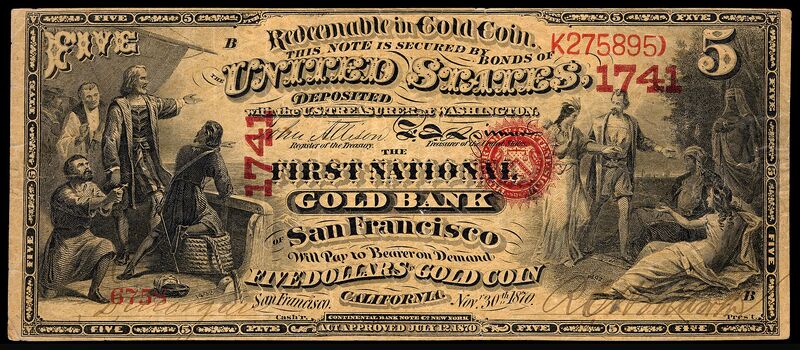
(The pic, from the DOE website, serves as a reminder of how even the largest oil producer in the world today was not immune to energy-related insecurities in the past)

2. China-scale stockpiling

✔Buy cheap during crashes (like China’s 2020 $30/barrel purchase spree).

✔Mandate private refiners to hold reserves (adding 30M barrels overnight).

3. Japan-level resilience

✔A 200-day runway. That’s gold-standard insurance.

Chokepoint risks are elevated now:

A Hormuz blockade could triple India’s import costs overnight. Without a 90-day SPR, India could face energy rationing and inflation super spikes.

But with a 90-day SPR by 2030, India could:

✔ Absorb price shocks

✔ Neutralize China’s 500+ stockpile that gives it leverage during a crisis

The choice is clear

The UK gambled on markets — and lost $100B.

India, learning from this, can now build the world’s smartest SPR — one that’s too fast to outflank, too big to intimidate, and too resilient to fail.


By

Avinash Menon, CFA

Founder and CEO,

52 Seconds Capital Limited

Other New Articles

As oil prices experience a super-spike, energy investors often wonder: “Should I bet on Oxy, ExxonMobil, or Chevron?”

Well, the answer really depends on your goals – because it is a fallacy to think that all three stocks react in a similar manner to oil price volatility; they tell three distinct stories.

In effect, don’t expect their price action to be similar in the current backdrop.

(And that is the ONLY purpose of this post; not to recommend one over the other)

You could think of these stories as:

1. A leveraged play

2. A blue-chip anchor and,

3. A balanced play

Here’s what moves them and why the differences matter:

Oxy: The Levered Play

Strengths:

Pure-play Permian exposure and high debt make it the top performer in sharp oil rallies (e.g., +120% in 2022 vs. XOM’s +80%).

Risks: Crashes harder in downturns (e.g., -60% in 2020). Buffett’s 28% stake admittedly creates a price floor. Also, the stock’s tech-like beta could cut both ways.

Catalyst Watch: Once debt falls below $15B, share buybacks could ignite a new rally.

ExxonMobil: The Blue-Chip Anchor

Strengths: Integrated operations (refining, chemicals) smooth out volatility. $50B buyback powers steady returns.

Risks: Less upside in oil spikes (long-cycle projects delay cash flow bumps).

Dividend Safety: 41 straight years of hikes – this is better suited for income investors.

Chevron: A balanced play

Strengths: Stronger upstream focus than XOM = slightly more oil leverage. $75B buyback (2023-25) supports EPS growth.

Risks: Less diversified than XOM (e.g., smaller chemical division)

Dividend Growth: 38 consecutive annual hikes – nearly matching XOM’s reliability.

By

Avinash Menon, CFA

Founder and CEO,

52 Seconds Capital Limited

Other New Articles

Disclaimer:

I am neither a Sharia scholar nor an authority on Islamic finance. But as someone involved in security selection, and therefore sometimes sukuk evaluation (strictly in consultation with Islamic scholars), I follow sukuks with both professional interest and personal curiosity.

Now, if you are also a sukuk enthusiast you must have guessed by now that the elephant in the room is the draft form of AAOIFI Shariah Standard 62 (62). The draft, released in Nov 2023, is expected to be issued this year, but the exact timeline remains unclear.

Ever since its release, the draft has been the subject of contentious debates.

Critics have panned it as operationally rigid, impractical for sovereigns, and even reductionist in its true sale requirements.

Proponents of the draft like the clear tilt towards Asset-Backed Sukuks (and away from Asset-Based ones).

From a professional viewpoint, I believe, 62’s emphasis on ‘True Sale’, in itself, is commendable.

IMO, it tackles the gradual mission creep in sukuks.

Sukuks were starting to mimic conventional bonds.

In its original form, Sukuks represent ownership, not debt.

62, while contentious, cannot be faulted for lacking in clarity.

By drawing an uncompromising line under Asset Ownership …

… it gets the market to confront a critical question:

Have Sukuks drifted too far away from their original identify and mission statement?

I see another powerful benefit coming through:

Implementation might result in a fork: with Sovereigns issuing Wakalas (predicated on the premise that 62 might make concessions, in its final standard, for sovereigns) and Corporates issuing Ijaras.

The market benefits and everybody wins.

How?

For Sovereigns:

62’s emphasis on ‘true asset transfer’ might cramp sovereigns who often have commingled assets; but that makes Sukuk Wakalas the preferred choice for sovereigns (Wakala means Trustee) and its flexibility with pooled assets (utilities, energy revenues) makes it a great toolkit for scalable, Sharia-compliant funding.

For Corporates:

62 returns the sukuk to its original form ─ turning the spotlight back on Beneficial Owners (instead of Creditors).

That can reroute capital flows into Corporate Sukuks and keep it sticky.

Why?

Because corporations might get a beeline of Buy-And-Hold investors (as investors in Sukuks often are) if they start issuing true asset-backed securities.

So, 62, if implemented, could:

1. Draw the curtain on the “anything goes” era of hybrid structures (While not strictly a Hybrid, you have got to think of Dana Gas here ─ an issuer that infamously defaulted by stating their sukuk had turned Sharia non-compliant)

2. Create a fork: with Sovereigns optimizing Wakalas; corporates perfecting Ijara.

Admittedly, Standard 62 isn’t perfect.

But perfection isn’t possibly the goal.

Clarity is ─ and in that, it has already succeeded

By

Avinash Menon, CFA

Founder and CEO,

52 Seconds Capital Limited

Other New Articles

Many decades later, market enthusiasts will reminisce about this great gold bull run.

Of how Central Banks worldwide backed up their trucks onto the yellow metal.

And how the largest of them even proposed an audit of their reserves.

In the context of that, this post might strike a jarring tone; for it’s about:

(1) the burgeoning gold reserves at Central Banks;

(2) an upcoming gold audit at Fort Knox and gold repatriations; but it is also about ….

(3) a conspicuously empty gold vault.

#1, we leave this point as is because it’s so in your face

#2 is indicative of a heightened global gold anxiety ─ from the US Bill proposing a Fort Knox audit to countries like Germany, Poland, Hungary, and The Netherlands actively seeking to repatriate their gold held abroad.

It’s clear that most countries, not unlike Scrooge McDuck, want the comfort of lolling about in their massive gold vaults.

#3 One country, however, shows no signs of gold anxiety.

And no, it’s neither an Emerging nor a Frontier Market.

Its AAA rated, is a member of both the G7 and G20 group of nations, and … it has a gold vault that’s empty.

Canada holds virtually ZERO gold. (Image Source: Government of Canada)

Why?

(1) Gold earns zero yield. It’s at best a store of value (and the idea of Central Banks holding a store of value sure does appear contradictory when viewed in the context of their chief role as inflation-dampeners)

(2) Offloading large blocks is complex and expensive

(3) Canada’s stability comes from its credible institutions, conservative regulatory frameworks, rule of law, and ─ to use a nifty turn of phrase ─ its ‘gold-standard’ AAA credit rating.

(4) Lastly, the ZERO gold decision creates a strategic advantage for Canada over other G20 nations: the costs for securing bullion (think Security, Insurance, Vaulting, and now Audits) are soaring. Also, storing gold abroad (in the NY Fed, for example) creates vulnerability (Germany has been considering repatriating its massive stockpile of gold, currently held in the NY Fed over worries stemming from Trump’s caprices)

So, while the US braces itself for an exhaustive audit ─ and this one could be a lot more than a peek-a-boo glance at the gold ─ of its gold reserves, Canada’s absence of gold reserves reflects a modern calculus:

High costs, rising anxiety, poor liquidity, and the escalating storage burdens outweighs symbolic value.

Also, Canada, by virtue of being the 4th largest producer of gold, probably has the safest vault on the planet anyway ─ its bedrock and placer deposits.

By

Avinash Menon, CFA

Founder and CEO,

52 Seconds Capital Limited

Other New Articles

Trump would have expected some criticism to his ‘The One, Big, Beautiful Bill’.

You know the kind where a critic calls his One, Big, Beautiful Bill, ‘ugly’ or ‘stupid’ or something drawn from a pool of words synonymous to those two.

He must have known those were coming and must have prepared for those kinds of verbal barbs.

Perhaps, in his mind’s eye, he would have had a plan: to duck, deflect, parry, or even counter those.

But to have it called a “disgusting abomination” must have cut deep.

That’s the kind of barb that sticks.

And is now in plain sight for everyone to see, as the Senate votes on the bill.

Trump intends to sign this bill into law by July 4th.

Here is where it gets interesting:

The Senate is considering this bill under a congressional procedure known as “budget reconciliation”. The use of this procedure limits amendments and potential obstruction; and does not require a 60-vote supermajority (in a 100-seat Senate).

Only a simple majority would do.

With the Republicans holding a 53-47 margin in the senate, you would think that they have got this in the bag?

One Big Beauty looks done and dusted, until you factor in the timing of Musk’s very public tirade.

Has Musk done enough to get at least 4 Republicans ─ a 50-50 will have the VP cast the tiebreaker, so the Republicans will need to lose more than 3 votes ─ to turn into Fiscal Hawks?

By

Avinash Menon, CFA

Founder and CEO,

52 Seconds Capital Limited

Other New Articles

The Swiss CPI remained unchanged in April 2025, not only when compared with the previous month but also on a yoy basis.

Surely, the 0.0 reading for April 2025 must mean that the next CPI print (for May) will be negative.

And a negative CPI print can only mean one thing: Deflation.

The deflationary effects have evidently been catalysed due to a turbo-charged CHF.

The SNB now sees the CHF’s record strength as a major bugbear.

Yet, is it possible, that not so far back in the past, the strength in the CHF had shielded the Swiss economy from purchasing-power busting inflation super-spikes?

Ironically, yes.

You might recall that while the Fed and the ECB dealt with high single-digit inflation, in the aftermath of Russia’s invasion of Ukraine in early 2022, through a rapid rate tightening exercise, the SNB increased rates only up to 1.75%.

Swiss average inflation, in 2022, was only 2.8%.

Incredible, yeah?

It was the strong CHF that insulated Switzerland then.

And yes, there was SNB intervention as well.

In 2022.

And especially in 2023, as the SNB turned into a large-scale seller of foreign currencies. In 2023 alone, the SNB sold $150 billion worth of foreign currency.

To understand the enormity of the SNB’s decision ─ sell foreign currencies to strengthen the CHF as a shield against imported inflation ─ you must consider that the SNB unwound what was essentially a carry trade, with the CHF as a funding currency, at potentially the worst possible time only because it stayed loyal to its primary mandate: price stability.

The situation that the SNB confronts now is decidedly different.

Against the twin backdrop of a temporary pause in the 31% tariffs against Swiss Exports and a Trump administration that has warned the Swiss against currency intervention, would the SNB go with a pure-play interest rate focused policy to manage an ‘imported deflation’ situation?

Or would it (in some ways true to its reputation: remember when the SNB stunned the currency markets on 15 Jan 2015? 😉), in a neat inversion of its 2022-23 playbook, intervene again?

By

Avinash Menon, CFA

Founder and CEO,

52 Seconds Capital Limited

Other New Articles

Let’s start with a question: what is the difference between a rival and an enemy?

Simple enough!

A rival is someone you compete against. And you could do this [ the act of competing] without necessarily liking or disliking your rival. In effect, you are rivals only because you are both in pursuit of the same thing.

An enemy is someone who wants to hurt you. Usually by bringing an overt threat to the table.

And so, when you look at the Trump-Powell spat in the context of this you get an idea that they cannot be rivals; and well (despite all the AI-generated images, flooding your newsfeed lately, of the two men engaging in various forms of bloodsport) they cannot be enemies either if they see eye-to-eye on some major policy moves that are in the works.

Read that again.

Trump and Powell are in agreement on some aspects on what may well be the most pivotal moment yet, in the evolution of money ─ the ascendancy of Stablecoins.

You see, well before the release of the seismic ‘Liberation Day (LD)’ Executive Order on April 2nd, Trump had on Jan 23rd, published a Presidential Action titled: ‘Strengthening American Leadership in Digital Financial Technology’.

IMO, 3 points in particular stood out:

1. On money itself … ” protecting and promoting the ability of individual citizens and private-sector entities alike to access and use for lawful purposes open public blockchain networks without persecution … and to maintain self-custody of digital assets”

2. On Stablecoins… “promoting and protecting the sovereignty of the United States dollar, including through actions to promote the development and growth of lawful and legitimate dollar-backed stablecoins worldwide”

3. On CBDCs … “taking measures to protect Americans from the risks of CBDCs .. including by prohibiting the establishment, issuance, circulation, and use of a CBDC within .. the United States”

You see a glimmer of an outline taking shape now?

Let’s stay with this.

#1 indicates that ‘currency mints’ could be privately-owned under ‘certain conditions’.

#2 lends further credence as to how you and I could mint USD ‘coins’. We must meet certain ‘conditions’ though.

These conditions followed on Apr 4th (when the world was in the throes of ‘Headline Anxiety’ as Tariff-related news swamped news feeds) when the SEC released its clear-as-crystal ‘Statement on Stablecoins’.

You (and ‘You’ could be a OCC-approved Corp incorporated in the US) can issue a USD stablecoin as long as you can back it with reserves (say T-bills)

#3 On CBDC’s, Powell in a Feb 11th statement to the senate said, “the Fed will not develop its CBDC as long as he is in charge”.

Since currency has already been dematerialized from its traditional forms of coins and notes, you must view the recent events [around Stablecoin in particular, refer snapshot taken today from Tether’s website to gauge adoption trends], not as a good or bad sign, but as just another chapter in the evolution of money.

By

Avinash Menon, CFA

Founder and CEO,

52 Seconds Capital Limited

Other New Articles

You are at a carnival (quizzically named ‘Let’s call it a year’).

It’s nice, boisterous, and crowded.

Everyone looks happy. Everyone is happy.

You are uneasy. You look around.

Past the colossal, gyrating rides. Past the rollercoasters that spiral and coil as they twist their way through the night skies. Past the clowns on stilts.

You are now looking at the space outside the carnival’s fence.

It’s dark.

You see the contours of something at the very edge of that darkness.

You don’t have a golfer’s vision and yet, even at that distance, you know what it is ─ its that old bogey man again.

The one that goes by the name ‘US Debt Ceiling’!

Forgive the dramatic prologue, but these lines pale in comparison to the theatrics on display in Washington every time the US is close to its debt ceiling deadline.

So, while there are truckloads of press around the newly announced @DOGE, a look at the calendar confirms what hasn’t been addressed yet – the return of that bogeyman.

DOGE is expected to conclude plans to axe $ 2 trillion in spends ‘no later than July 4, 2026’

Inauguration Day is Jan 20, 2025.

You will recall that the US suspended the debt ceiling in Jun 2023.

The events leading to the ceiling suspension in 2023 were both chaotic and farcical: among others, there were whispers ‘that a trillion-dollar coin could be minted as a last-ditch solution’ and Biden could potentially invoke an archaic amendment ─ 14th amendment (Sec 4) ─ that could help him override Congress.

That Jan 1 ceiling reinstatement date implies Trump has no reaction time (and explains why the DOGE announcement was a priority).

There is also another uncomfortable first here ─ this is going to be the first time that there will be a change in govt while the ceiling is still in suspension!

What might work for Trump is how the Republicans voted the ceiling suspension in 2023. There was broad consensus on spending cuts.

Infact, the opening bid from the Republicans during the 2023 ceiling talks was for $4.8 trillion in savings over a decade. They eventually won about $1.5 trillion in reductions.

While some of these spending cuts appeared ‘unrealizable’ then, the Trump trifecta of the White House, the Senate and the House could make it easier for Trump to push through some of DOGE’s earliest recommendations during the ceiling talks early next year.

And amidst all this, spare a thought for that motley group of activists who, until a few years ago, occupied a tiny corner of the US political landscape: from within the Republican Party, they formed the TEA Party movement in 2009, advocated for lower taxes, a reduction of debt, decreased spending and a smaller government.

It’s that core set of TEA party ideas that Trump will look to execute.

It’s early days.

But if there is a formula to define Trump’s fiscal legacy it would be this:

Reagonomics + Reduction in Federal Spending + Plateauing of national debt.

By

Avinash Menon, CFA

Founder and CEO,

52 Seconds Capital Limited

Other New Articles

The US CPI numbers for Sep, released last week on Oct 10, created a flutter in the markets.

The +2.4% in the CPI wasn’t really the spoiler (this print was, infact, the smallest 12-month increase since Feb 2021). Instead, the cause for that queasiness was the little uptick in the Core CPI (which strips out Food and Energy) ─ up from 3.2% recorded in Aug 2024 to 3.3% in Sep 2024!

And, after nonfarm payrolls grew by 254k in Sep, well ahead of the estimated 150k, that little uptick in Core CPI was the perfect glimmer for the 10yr UST yields as it cemented a run of consecutive daily increases from Oct 1-10 ─ only giving up a sliver of that rise, to close at 4.08% on Oct 11.

Here are the values:

Date Value

Oct 11 – 4.08%

Oct 10 – 4.09%

Oct 9 – 4.06%

Oct 8 – 4.04%

Oct 7 – 4.03%

Oct 4 – 3.98%

Oct 3 – 3.85%

Oct 2 – 3.79%

Oct 1 – 3.74%

Now, if I personify the 10-yr UST yield and ask you to look at it, as it raises a well-earned ─ rising in the face of front-loaded cuts to the short-term rates is no mean feat ─ weekend sundowner at a setting sun, a broad grin splitting its sun-soaked face, a thought cloud hanging over its head, and ask you:

What is most likely to be in that cloud?

Your guess is as good as mine, it’s this: are you sure you have bottled that genie, Mr. Central Banker?

The answer to that question lies in an upcoming data print, perhaps the last critical one for this year ─ the change in the PCE for Sep will be released on Oct 31, 2024!

The PCE prints for May, Jun, Jul and Aug have come in at +2.6%, +2.4%, 2.5% and 2.2%.

This [Sep 2024] is a critical print because while the Core CPI uptick may have created a ripple in the markets, the Fed’s preferred gauge for inflation is the PCE and any uptick in this could create further step ups in the queasiness I referred to earlier.

So, will the Sep PCE number buck the trend?

It may not; and I say this with a fair degree of confidence.

I believe it’s due to the very composition of the PCE.

It’s interesting that the Fed’s shift in choice from the CPI to the PCE only happened in early 2000 after Greenspan’s Fed highlighted ” …the PCE chain type index is constructed from a formula that reflects the changing composition of spending and thereby avoids some of the upward bias associated with the fixed-weight nature of the CPI…” in his monetary policy report to the Congress then. (full extract shown)

Apart from the fact that it’s chain-linked and it better captures changes in the composition of spending, the PCE also includes a broader array of components relative to the CPI. This implies that the additional components [in PCE] are likely to crowd out the larger weights of housing and energy in CPI (housing, for instance, makes up 33% of the CPI basket but only 15% of PCE).

I am admittedly out on a limb when I say this: the PCE print for Sep could come in at 2% or lower.

And if it doesn’t, well, then we know who that cheery soul, cradling a sundowner, is.

By

Avinash Menon, CFA

Founder and CEO,

52 Seconds Capital Limited

Other New Articles

On July 21, Biden became the first sitting US president, since 1968, to drop out of a presidential race. And that fast-tracked his entry into that blighted club all outgoing US presidents detest ─ The Club of Lame Ducks!

Biden’s lame-duck session would have begun in November this year (when the Congress meets after a successor is elected, but before the successor’s term officially begins); that is, if he hadn’t pulled the plug.

But as things stand, Biden has a couple of months ahead of his final congressional session. Nov may not offer much in terms of surprises. True to tradition, like most of his predecessors, Biden may use those final few days in office to pardon turkeys and felons alike; and, while at it, make some judicial nominations as well.

So, it isn’t about Nov, but what Biden could possibly do in Sep and Oct?

For one, Biden could nix Nippon Steel’s bid for US Steel!

The transaction, announced in Dec 2023, is worth about $14.9 billion when including the assumption of debt. At $55.00 per US Steel share, the transaction represented a 40% premium.

That was then.

And before politics seeped into the deal.

US Steel now trades 35% down YTD.

That’s because Biden has the presidential powers to directly block the deal ─ under the 1950 Defence Production Act ─ and it appears that he is relying on the Committee on Foreign Investment in the United States (CFIUS), a body responsible for evaluating the national security implications of foreign investments in U.S. companies, to make the case for the deal to be killed.

Are the reasons cited for killing the deal compelling?

This is where the narrative gets foggy (and dodgy!).

Consider these points:

1. The acquirer is a Japanese firm. And Japan is a strong US ally. (Whatever happened to ‘friendshoring’ – Part 1)

2. The reaction from the White House has been so vehement that one might get the impression that US Steel is a colossus. Not really! US Steel isn’t among the Top 5 producers in the world. It’s not even among the Top 20. US Steel breaks into the global list at 24. (Fun fact? 6 out of the Top 10 are Chinese).

3. Nippon’s play is clear here: (a) fly under the US import tariff radar and (b) bolt US Steel’s 15.75 MT production onto its own 43.66 MT to vault into third place (displacing Ansteel, while still trailing China Baowu and Arcelor).

Clear as day so far.

The narrative gets obscure from hereon.

Especially when viewed through the lens of CFIUS and its ‘fears’. Primarily around lowered supply in the US. And production moving over time to India. (Whatever happened to ‘friendshoring’ – Part 2)

(For those of you who like to think of a ‘direct threat to national defence’ angle here: the Pentagon’s annual steel requirements consume just 3% of total U.S. production)

So, what’s it going to be?

An acquisition that appeared inevitable after US Steel put itself up for sale last year.

Or

An acquisition that got upended only because it surfaced during an election year.

By

Avinash Menon, CFA

Founder and CEO,

52 Seconds Capital Limited

Other New Articles