Your product design works. You are happy. You then turn it up a few notches. That works as well. You are now both happy and warm. Pleased? Hell No! You now crank it up really big. You don’t know it yet but you are now in the realm of Overdesign. It might still work but it’s pointless really and eventually the design – in its cranked up form – trips over itself. Today at 52 seconds, we explore – yeah, there is a bit of time travel here involving some really cool set of wheels from ancient Egypt – the ridiculous art of Overdesigning and why some companies are awesomely good at it in a really bad way when you look at their products’ design in its entirety.
From Merriam-Webster.com:
Over.d.esign. : to design in a manner that is excessively complex or that exceeds usual standards (as of sturdiness or safety)
This is the Spirit of Ecstasy: a bonnet ornament sculpture found on the hood of a Rolls Royce car.
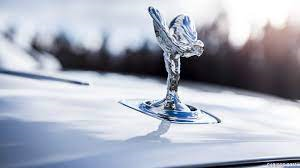
This figurine is perhaps the most famous of all hood ornaments but it wasn’t definitely the first of them. The first known hood ornament – as stated in the all-knowing Wikipedia – was a sun-crested falcon (to bring good luck) mounted on Egyptian pharaoh Tutankhamun’s chariot.
While the Pharaoh may have put the Falcon on his chariot for good luck, Rolls Royce designed its hood ornament to cover the ungainly radiator cap! Result: Rolls Royce now had an uber-luxurious hood ornament on an uber-luxurious car!
This Inception-like luxury-within-a-luxury approach prevailed among competitors as well. Other notable Hood Ornaments were: The Jaguar Leaper, Mercedes Benz’ Three Pointed Star, Bugatti’s Dancing Elephant, Bentley’ Flying B and Cadillac’s Silver Swan.
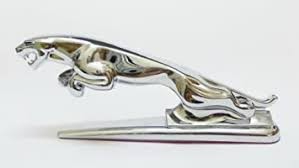
As the battle for decorative hood ornaments heated up, companies like Desmo and Smith (now defunct) and Louis Lejeune (founded in 1933 and the only surviving maker of custom car mascots) made their fortunes by designing and sculpting these ornaments for automobile manufacturers.
Hood Ornaments peaked out in the 50’s and only declined in usage from thereon primarily due to the their safety hazards, especially to pedestrians struck by hood-decorated cars. However, well before that the radiator caps had already gone under the hood! And that makes you wonder why the radiator cap had to be embellished with an ornament instead of simply relegating it to where it eventually went.
Today, Hood Ornaments, like other rare art and collectibles, exist in the space of Alternative Investments and have investment attributes similar to some of the other Alternative Investments like Art, Coins, Figurines and Vinyl Records. Those attributes are: Trophy Valuations, Price Opacity, Illiquidity and a high risk of Counterfeiting.
***
When personal computing devices – like the Apple Mackintosh – went mainstream in the 80’s, the Skeuomorph Design Form – a design form in which (often virtual) icons are used to represent a real world object – played a starring role in their success. Recall that this was the first time a personal computing device was entering households worldwide. The introduction of GUIs (the Graphical User Interfaces) was a major catalyst in the products’ eventual success as novice users, leaping across a yawning chasm of techno-ignorance, understood the function of the icons displayed on their computer screen simply by relating to what they looked like and worked like in the real world. A well-known Skeuomorph example is the recycle bin icon used to trash unwanted files. There are some really bad examples of Skeumorphs as well: Ever used those ‘virtual calculators’ with ‘raised buttons’ on a smart phone?
***
And that brings us to, what I believe is, the most ridiculously overdesigned product in modern times: The Necktie.
I have two zenmasters at home. They are 9 and 6 years old and like most zenmasters in that age demographic they have the ability to peek into the eyes of a product and reach the depths of its soul.
Their question was as innocuous as it can get: Why does anyone wear a necktie?
My response – knowing that the zenmasters appreciate large weights to ‘cause-and-effect’ in responses to such questions – was:
“The primal man felt cold. He then cloaked himself within the fur-skin of a hunted grizzly bear. He then realized that the cloak restricted his hands and so he cut out holes, in the cloak, for his hands. He then realized that his neck was still bare and so he created a rough-and-ready collar. Yeah, so far so good. The zenmasters nod their heads appreciatively. I try and build upon my winnings. Any refuge from those icy – pre-climate change – blasts wasn’t possible if the collar remained open. And so buttons were created to hold the entire contraption together. The rest is easy. The necktie was possibly created to hide those ugly buttons.”
That’s my explanation for how neck-ties came into existence. What’s yours?
By
Avinash Menon, CFA
Founder and CEO,
52 Seconds Capital Limited