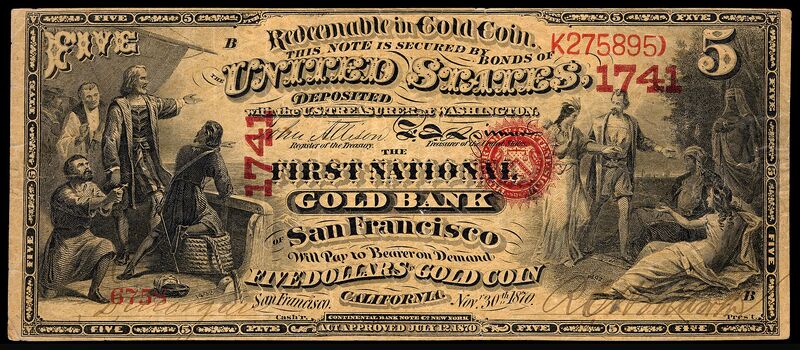
Consider the irony.
In 1933, the US dollar was still convertible to gold. And yet, that very year, Americans were prohibited from owning gold.
Executive Order 6102 forced citizens to hand in their gold.
Their currency was gold-backed, yes. But the citizen holding that gold-backed currency was not allowed to hold gold. That prohibition lasted 41 years – private ownership was only fully restored in 1974.
Cut to today.
There is a physical note called the Goldback. It is NOT federal legal tender, but it has actual fractional gold embedded into it. No questions about convertibility to gold since the note itself is the bullion asset.
Read that again.
The very thing the citizen was once barred from holding is now the promise printed into a private note.
Where was it launched?
Utah. In 2019. A state – among 11 states – that still recognises gold, silver, and sometimes platinum as a voluntary medium of exchange.
Since then, it has spread beyond its place of origin
The Goldback has since found acceptance across other red states – Nevada, New Hampshire, Wyoming, South Dakota, and more recently Florida, Oklahoma and Arizona.
Now, let me be clear about what this is not.
This is not a call to say Goldback will topple the dollar. It won’t. And this is certainly not a nudge to pile into it.
This is merely an observation.
Against a backdrop of peak debt and nagging questions around the purchasing power of fiat, the evolution of money is throwing up little experiments at the fringes.
Most will amount to nothing.
But ‘most’ is not ‘all’
And that sliver – that trend you were too quick to dismiss – is often where the next chapter of monetary history quietly begins.
Keep an eye on the fringes.
It’s where you must train yourself to look first.